
What is MTBF? Understanding Mean Time Between Failures and Its Role in Maintenance

15 Jun, 2026 · min read
Introduction
The key performance indicator used to measure Mean Time Between Failures is one of the most important metrics in maintenance management and asset performance tracking. It reflects system and equipment reliability and has a direct impact on operational efficiency and maintenance costs.
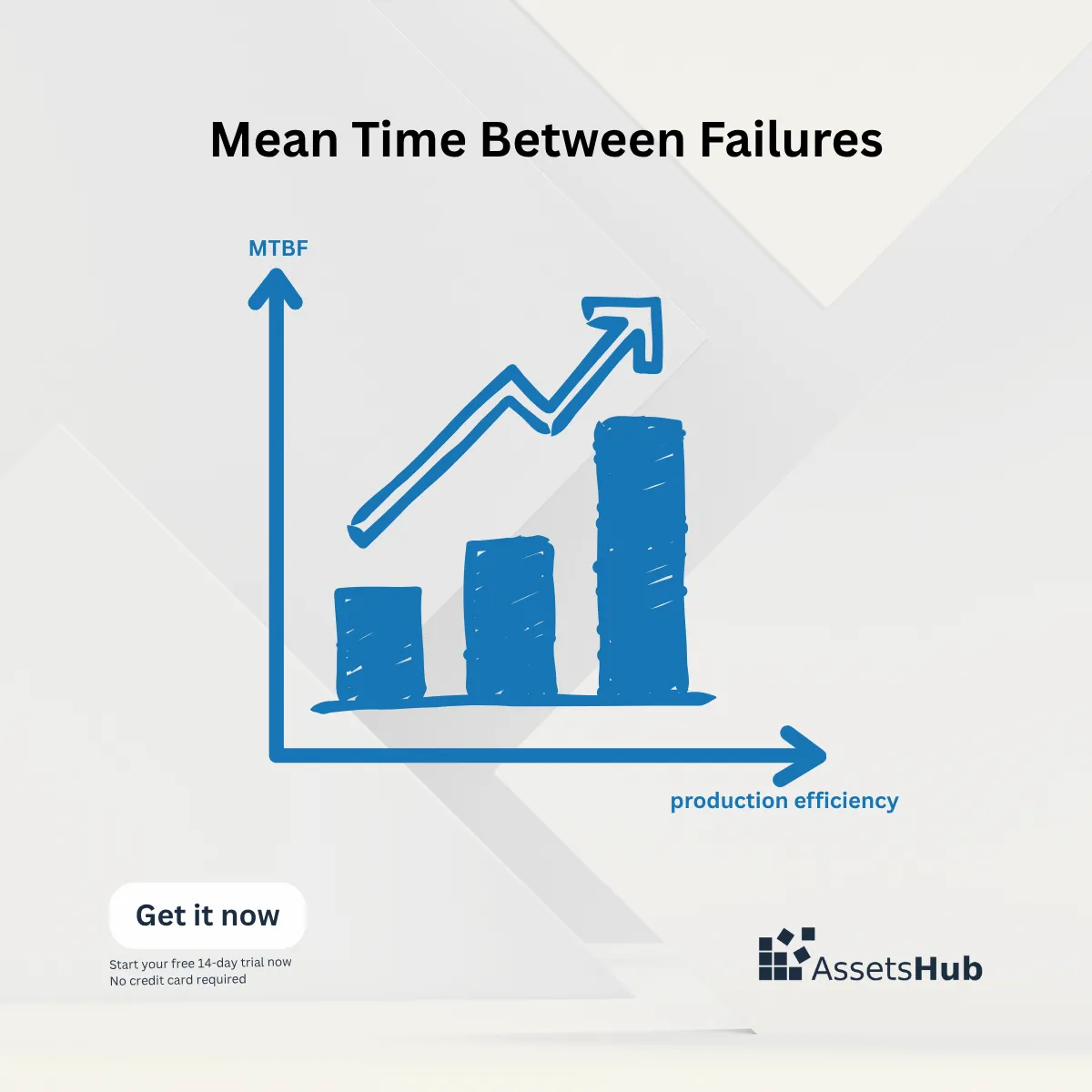
Higher MTBF values indicate fewer failures, which in turn means reduced downtime and improved operational stability across assets and equipment. Tracking this metric enables data-driven decision-making, improving forecasting accuracy, enabling better resource allocation, and supporting more effective maintenance planning.
What is the MTBF KPI?
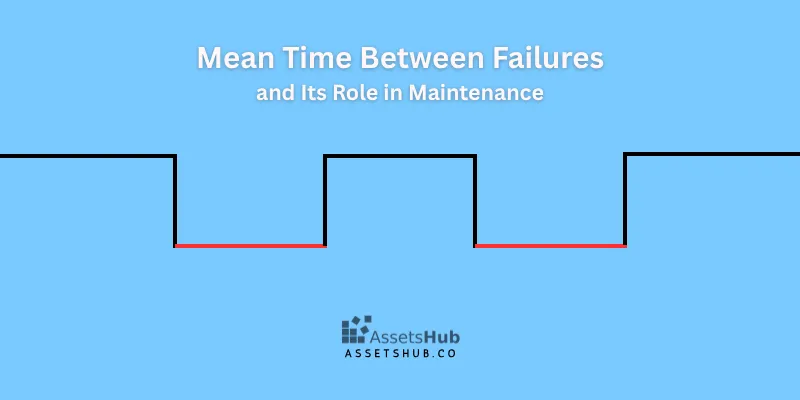
MTBF stands for Mean Time Between Failures. It refers to the average time between equipment or asset failures or downtime events. In practice, it represents the average operational time between two failure events that cause an asset to stop working, whether due to a malfunction, breakdown, or scheduled maintenance activity.
More precisely, MTBF measures the average uptime between failures and is widely used to assess reliability, improve maintenance efficiency, and reduce unplanned downtime in industrial assets.
Key Highlights
Definition of MTBF as a performance metric
Importance of regularly calculating MTBF
The role of accurate data in reliable MTBF measurement
How modern CMMS & EAM systems like AssetsHub improve MTBF tracking
How MTBF can be calculated using available operational data
Interpreting MTBF values for assets and equipment
MTBF (Mean Time Between Failures)
MTBF refers to the average time between failures for a given asset or piece of equipment. It represents the total operational time divided by the number of failures observed.
In simpler terms, it is the average duration an asset operates before experiencing a failure or requiring maintenance-related downtime.
Importance of MTBF
The importance of MTBF becomes clear when evaluating equipment reliability, which directly affects operational efficiency and maintenance costs. Integrating this KPI into performance management frameworks allows organizations to better allocate resources and optimize maintenance schedules.
Monitoring MTBF helps identify trends that support smarter maintenance planning and capital investment decisions, ultimately improving business outcomes. Over time, improving MTBF can lead to higher ROI and stronger financial performance.
However, MTBF should never be interpreted in isolation, as it is closely linked to other operational factors such as cost, safety, reliability, compliance, and overall operational performance.
How MTBF is Calculated
MTBF calculation is conceptually simple but practically challenging.
The formula is:
MTBF = Total Operating Time / Number of FailuresThe simplicity of the formula is misleading، the real challenge lies in collecting accurate, consistent, and reliable operational data. Without proper data governance, MTBF loses its reliability as a performance metric.
Benefits of Tracking MTBF
MTBF directly influences several operational areas:
1. Reducing Downtime
Improving MTBF leads to fewer interruptions and more stable production processes.
2. Reducing Maintenance Costs
Each failure carries direct and indirect costs. Higher MTBF generally means fewer emergency repairs and more efficient maintenance spending.
3. Improving Asset Reliability
MTBF is a core reliability indicator. Higher values indicate more dependable systems, while lower values suggest underlying reliability issues.
4. Enhancing Safety
Unplanned failures can pose risks to personnel and equipment. Improving MTBF reduces the likelihood of sudden breakdowns and safety incidents.
5. Improving Compliance
In regulated industries, frequent failures may indicate non-compliance with safety or operational standards. Strong MTBF performance helps demonstrate adherence to regulatory requirements.
Key Challenges
While MTBF is easy to define mathematically, implementing it correctly depends heavily on data quality and availability.
Many organizations struggle with:
Lack of structured data collection
Fragmented data sources
Inconsistent reporting practices
Challenge 1: Data Availability
Data availability refers to whether operational and downtime data is properly recorded and accessible in a structured manner. Relying on informal knowledge such as “the technician knows what happened” is not sufficient, as it introduces dependency on individuals rather than systems.
Paper-based systems also fall short due to data loss risks and lack of traceability.
How to overcome it:
Adopt structured data systems, starting from Excel-based tracking to advanced CMMS & EAM platforms.
Data Quality
Having data is not enough، it must also be accurate and complete. Missing or inconsistent records (such as incomplete downtime logs) can significantly distort MTBF calculations.
How to overcome it:
Train teams on proper data entry practices and adopt systems that enforce mandatory input fields before work orders can be closed.
Data Consistency
Inconsistent or unlinked data reduces its usefulness and creates operational inefficiencies. For example, recording downtime without linking it to a specific asset makes the data less actionable.
How to overcome it:
Ensure structured workflows and adopt systems that enforce proper data relationships between assets, work orders, and downtime events.
Interpreting MTBF
MTBF reflects the average operational time between failures and serves as a key reliability indicator.
High MTBF → High reliability and stable operations
Low MTBF → Potential underlying operational issues
General benchmarks:
1000+ hours → Excellent reliability
500–1000 hours → Acceptable but should be monitored
Below 500 hours → Poor reliability requiring investigation
How AssetsHub CMMS & EAM Supports MTBF Tracking
Systems like AssetsHub help organizations automatically track downtime and uptime for each asset in a structured and consistent way, without adding complexity to technician workflows.
A typical workflow:
A work order is opened for an asset
The technician starts the job via a mobile app
The system automatically records downtime
The technician completes the job
The engineer confirms closure
MTBF is automatically recalculated for the asset
This approach ensures accurate, real-time reliability tracking with minimal manual effort.
Frequently Asked Questions
What is MTBF?
MTBF stands for Mean Time Between Failures and represents the average time between equipment failures.
Why is MTBF important?
It helps improve reliability, reduce maintenance costs, enhance safety, and support operational efficiency.
How is MTBF calculated?
Total operating time divided by the number of failures.
Does AssetsHub calculate MTBF automatically?
Yes, MTBF can be automatically calculated per asset and over specific time periods.
Conclusion
MTBF is one of the most important performance indicators in maintenance and asset management because it provides a clear view of equipment reliability and operational stability.
Higher MTBF values indicate fewer failures and more efficient operations, but the accuracy of this metric depends heavily on the quality of the underlying data.
Improving MTBF goes beyond reducing breakdowns، it leads to lower operational costs, improved safety, better planning, and stronger regulatory compliance.
Organizations that continuously monitor and improve MTBF using modern CMMS & EAM systems are better positioned to achieve long-term operational stability, higher asset reliability, and improved overall performance.